
White Desert Camel Safari: Camel vs Jeep and How to Choose
 Local insight by Eyad Elzaghandi
6 min read
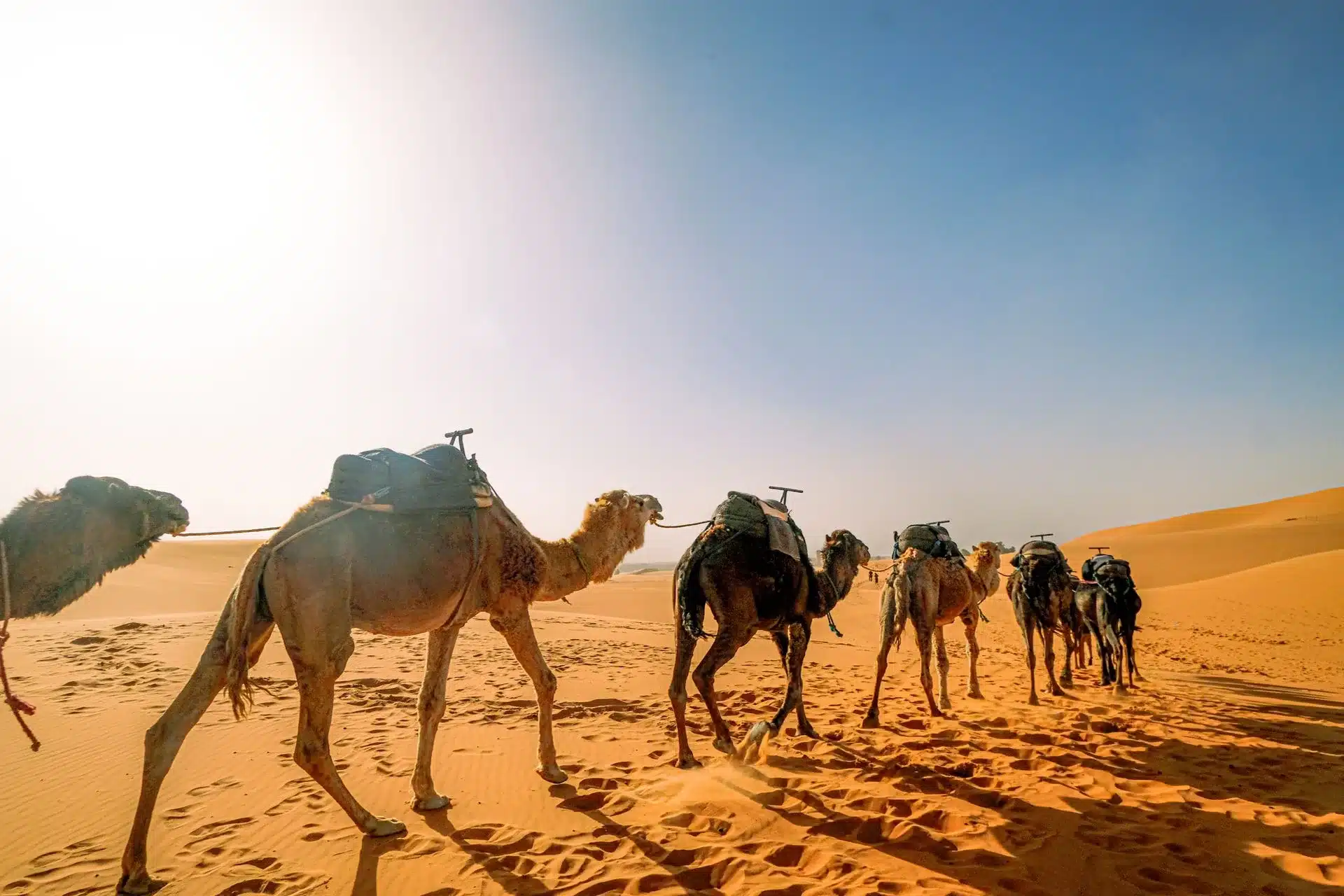
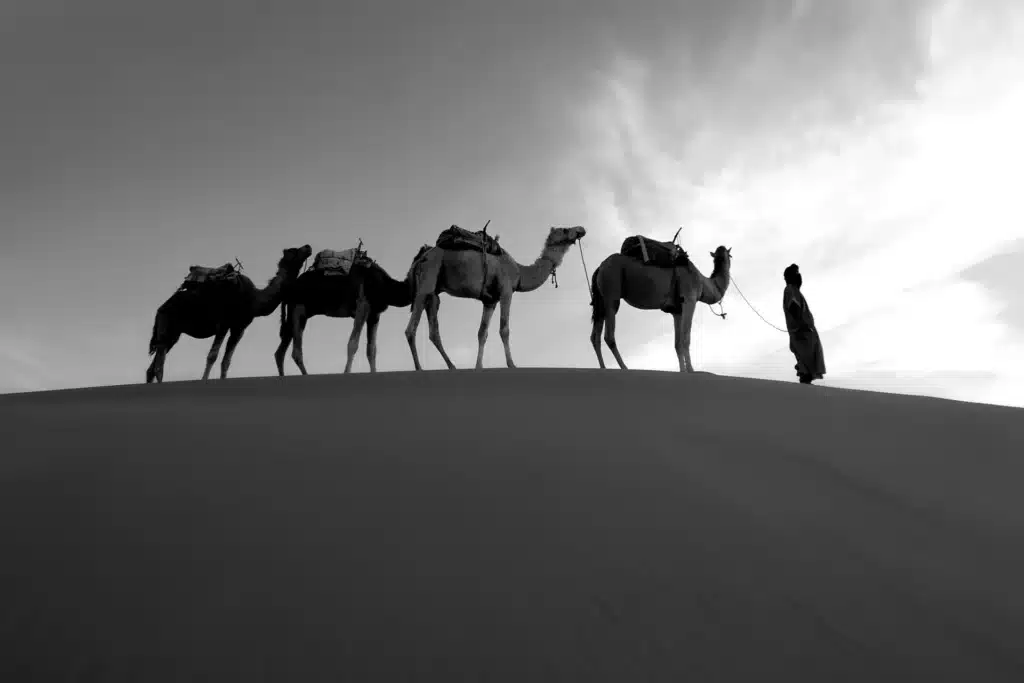
A White Desert camel safari is a slow journey through the chalk formations of Egypt’s Western Desert, riding and walking beside camels with Bedouin cameleers and sleeping at desert camps. Three days is the best length for most travelers. A 4×4 support car carries water and luggage, so you only enjoy the silence, the rocks and the stars.
- Best length3 days, 2 nights
- Riding time3 to 5 hours a day
- Best monthsOctober to April
- SuitsAges about 8 and up
In this guide
Why travel by camel?
For thousands of years the only way across the Western Desert was on a camel. Caravans moved between the oases at the pace of a walking animal, and the desert revealed itself slowly. A White Desert camel safari brings back that rhythm. There is no engine noise, no rush and no window between you and the landscape.
From the back of a camel the chalk towers rise slowly in front of you, the light changes hour by hour and you notice the small things: fox tracks, fossil shells, the shape of the wind in the sand. Many of our guests tell us it was the most peaceful moment of their whole trip to Egypt.
Camel vs jeep: which is better?
This is the question we hear most. The honest answer is that they are different experiences, and many guests combine both.
| Camel safari | Jeep safari | |
|---|---|---|
| Pace | Slow, quiet, immersive | Fast, covers more ground |
| Sights per day | One area in depth | Black Desert to White Desert |
| Best length | 3 days or more | 1 or 2 days |
| Physical effort | Light to moderate | Very light |
| Best for | Slow travelers, couples, photographers | Families, short trips, first visits |
If you have only one or two days, choose the jeep and see the highlights. If you have three days and want the desert to really slow you down, choose the camel. On our 3-day camel trek we drive the Black Desert and Crystal Mountain by 4×4 on day one, then switch to camels for the White Desert. You get the best of both.
What does a day on a camel safari feel like?
Here is a typical day from our camel trek:
- 6:30 AM wake up as the sun lights the chalk rocks. Tea by the fire and breakfast.
- 8:00 AM the cameleers load the camels and you start riding.
- 11:30 AM stop in the shade of a big rock for lunch and a long rest.
- 3:30 PM ride or walk again as the light turns golden.
- 5:30 PM reach camp for sunset, then dinner cooked on the fire and a sky full of stars.
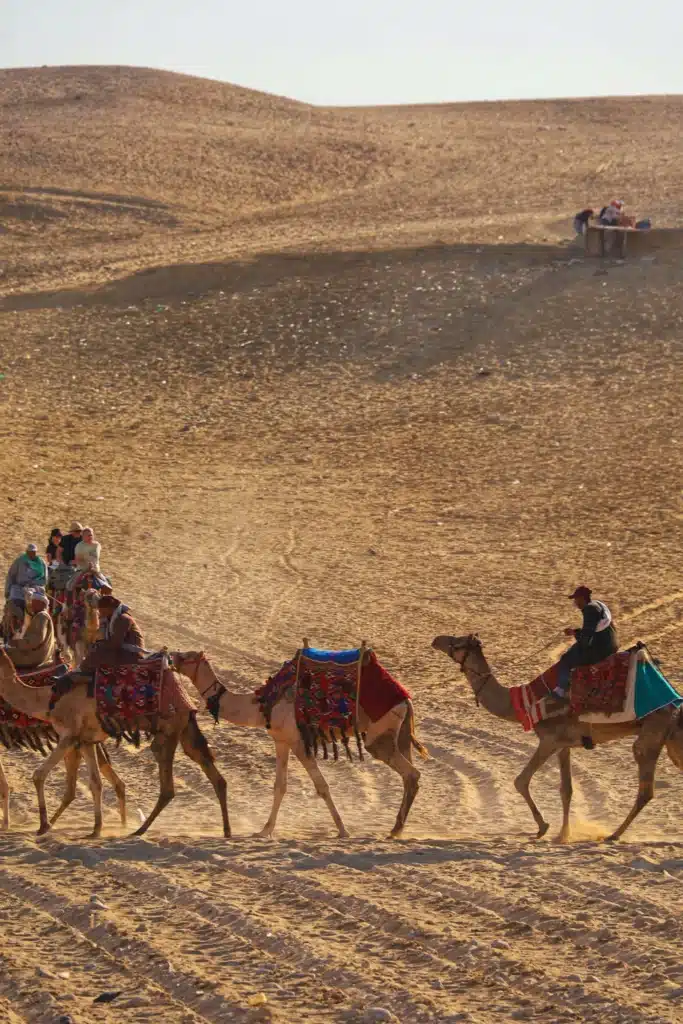
You do not ride all day. Most travelers ride for 3 to 5 hours and walk beside the camels for part of the way, which is very pleasant and keeps the body comfortable.
Who is it for?
Almost anyone in normal health can enjoy it. You do not need any riding experience: our cameleers lead the camels, help you get on and off, and adjust the saddle until you are comfortable.
- Children from about 8 years old usually love it, with shorter riding times.
- Seniors are welcome. We plan shorter stages and the support car is always close.
- Travelers with back problems should talk to us first. Walking stages can replace riding.
What to pack for a camel safari
- Long, comfortable trousers. Shorts rub on the saddle.
- A wide hat or scarf, sunglasses and strong sunscreen.
- Closed shoes for walking on sand and stones.
- A warm jacket and hat for the evenings, especially from December to February.
- A small day bag. The 4×4 carries your main luggage.
- A headlamp, lip balm and wet wipes.
We provide mattresses, sleeping bags, blankets, all meals and water.
How much does it cost?
Prices depend on the number of days and the size of your group, because every trip is private. On our 3-day camel trek, the price per person goes down as your group grows, and it includes transport from Cairo, camels, cameleers, a guide, the support 4×4, two nights at camp, all meals and park fees. You can see the full price table on the camel trek page.
Be careful with very cheap camel rides offered on the spot. They are often short rides near the road, without a support car or real camp. In the desert, safety and good camels matter more than a small saving.
Camels and the caravan routes
The oases of the Western Desert were once connected by long caravan routes, and camels carried dates, salt, olives and travelers between them for centuries. Families in Bahariya still keep camels, and many of our cameleers learned from their fathers and grandfathers. When you ride with them, you are not doing a tourist activity, you are joining a tradition that is still alive.
How we care for our camels
Our camels belong to cameleers from Bahariya who have worked with camels all their lives. The animals rest at midday, drink and eat well, and never carry more than they should. A good camel is a member of the family here, and our cameleers treat them that way. If you want to help, ask the cameleer how to greet the camel and offer it a handful of dates.
White Desert camel safari: the short version
- A camel safari is the slowest and most peaceful way to see the White Desert.
- Three days is the ideal length, with 3 to 5 hours of riding a day.
- Choose a jeep for 1 or 2 days, a camel for a deeper experience.
- No experience needed. Cameleers lead the camels and a 4×4 supports you.
- Pack long trousers, a hat, closed shoes and a warm layer for the night.
White Desert camel safari FAQ
How long should a White Desert camel safari be?
Three days and two nights is the best length for most travelers. Longer treks are possible on request.
Is a camel or jeep safari better in the White Desert?
A jeep covers more sights in 1 or 2 days. A camel is slower and more immersive. Our camel trek combines both.
Do I need experience to ride a camel?
No. Cameleers lead the camels and help you get on and off.
How many hours a day do you ride?
Usually 3 to 5 hours, with walking stages and a long rest at midday.
Can children join a camel safari?
Yes, from about 8 years old, with shorter riding times.
What is the best time for a camel safari?
October to April, when days are warm and nights are cool.
Where do we sleep on a camel safari?
At desert camps with mattresses, sleeping bags and blankets, set up by our team.

Eyad was born in Bahariya Oasis and works as a licensed tour guide. With the Egypt Desert Trips team of local guides and drivers, he hosts travelers in Cairo, the Western Desert, the Nile Valley and Sinai. Meet the team.
Keep planning
Planning your own Egypt journey?
Tell us your dates, interests and travel style. Eyad and the Egypt Desert Trips team will help shape a private journey around the Egypt you want to experience.
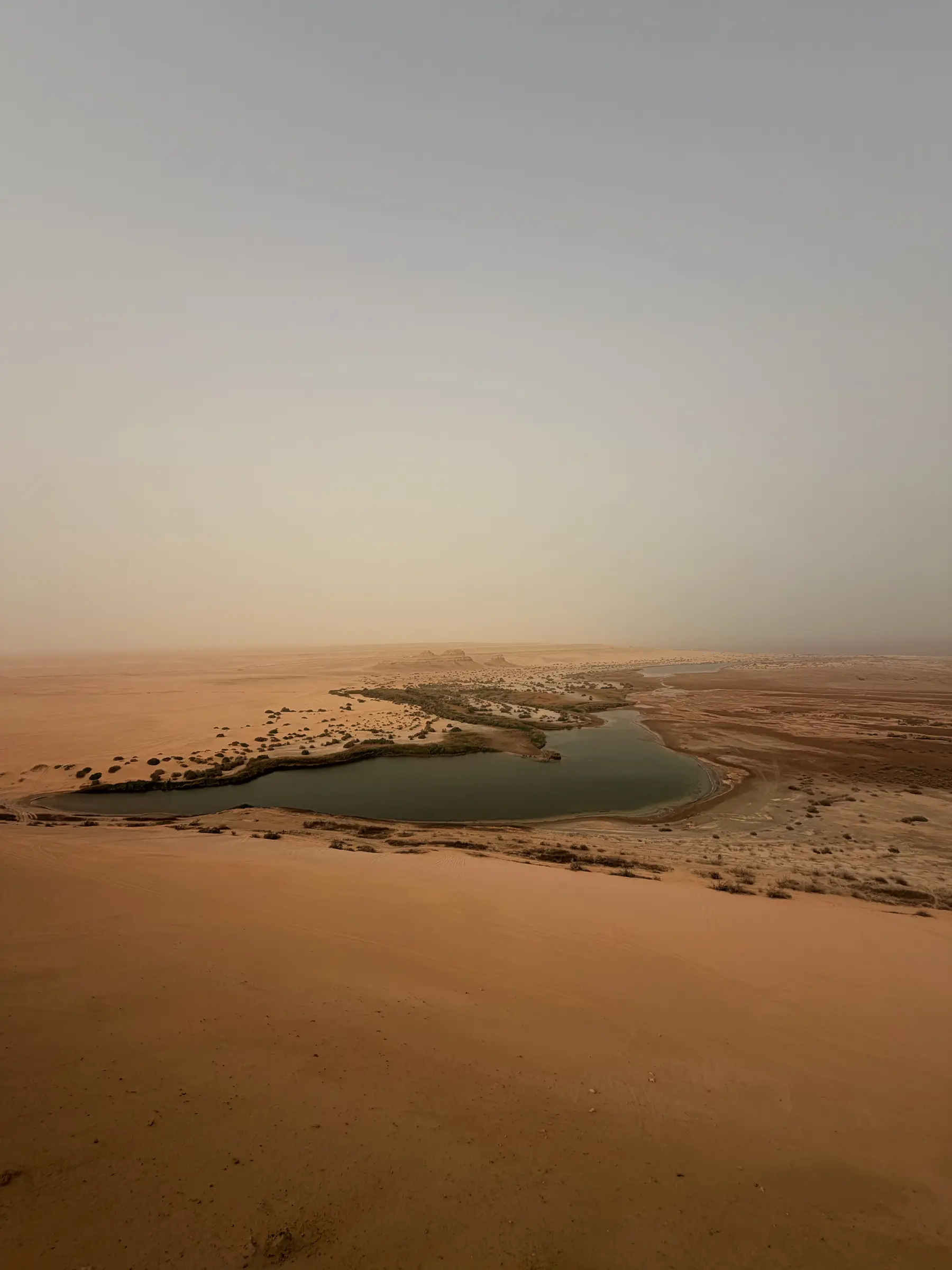
10 Things to Do in Fayoum, Egypt: Dunes, Waterfalls and Whales
A local guide to the best things to do in Fayoum, from the waterfalls of Wadi El Rayan and the…
Read Guide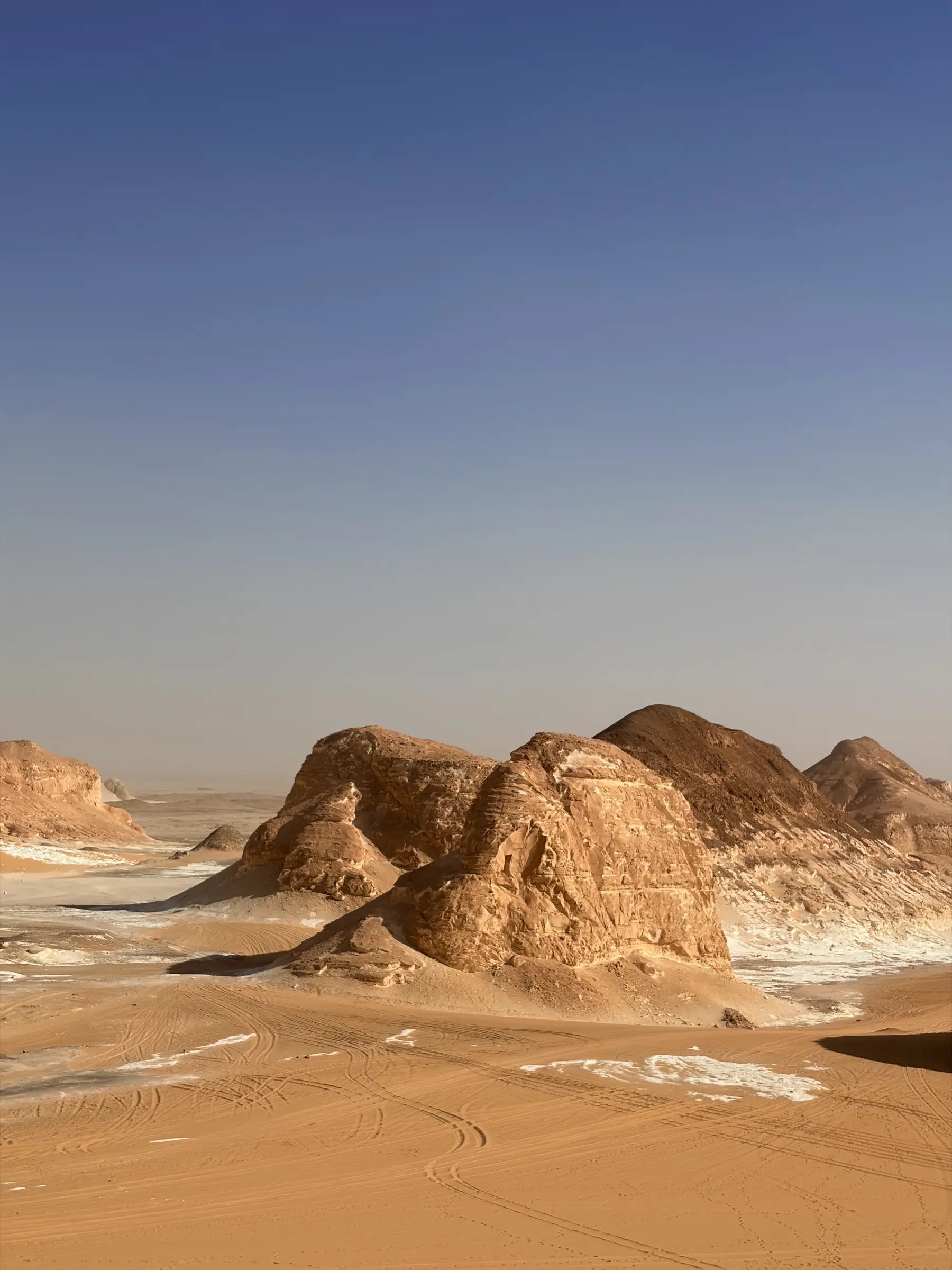
12 Things to Do in the White Desert, Egypt (A Local’s List)
Our local list of the best things to do in the White Desert of Egypt, from sunset at Mushroom Rock…
Read Guide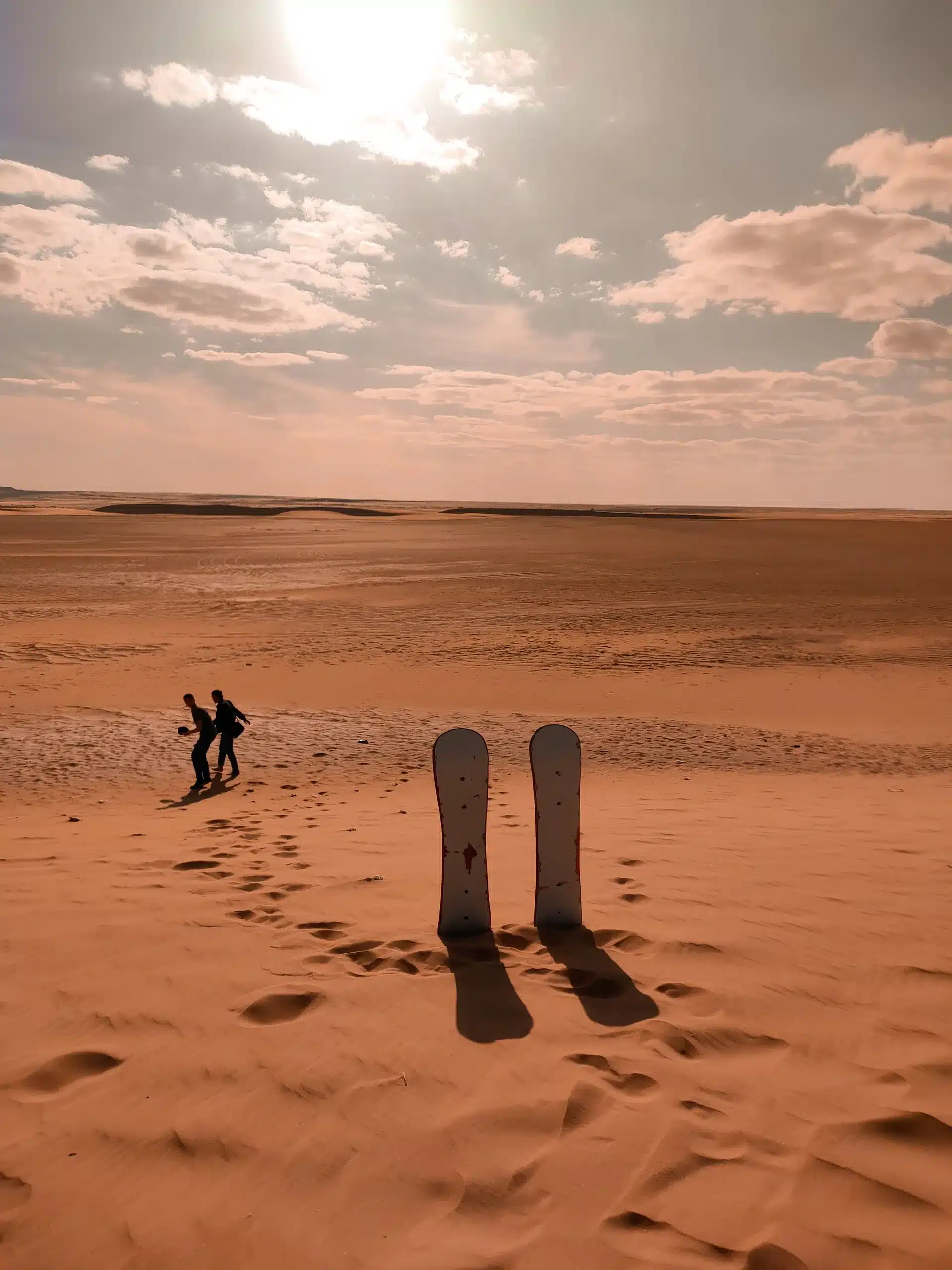
Sandboarding in Egypt: Best Dunes, Fayoum Buggy Rides and Tips
Where to go sandboarding in Egypt, how a first session works, how to combine it with a dune buggy ride…
Read Guide