
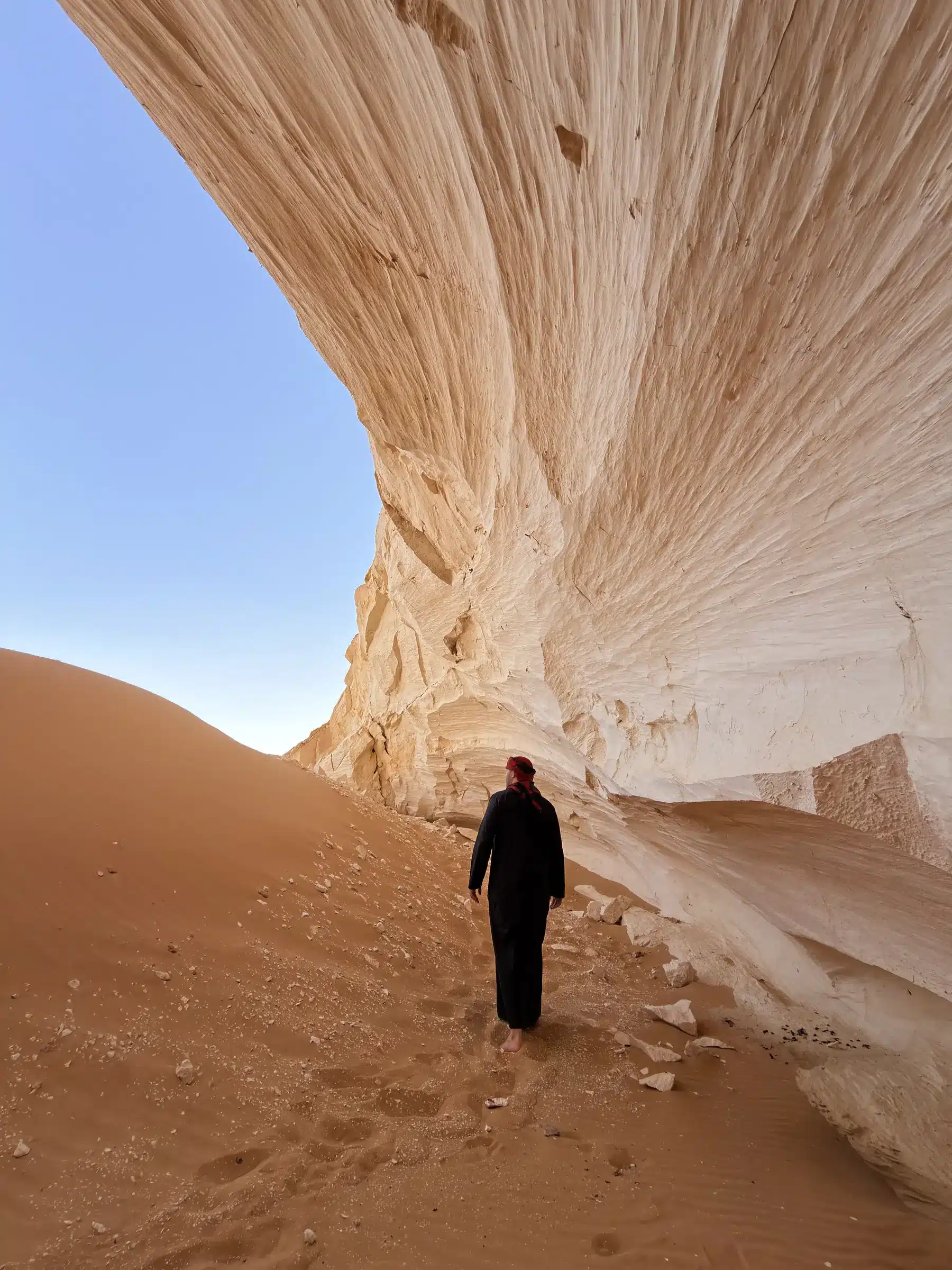
White Desert Hiking: Routes, Difficulty and Tips from a Local
 Local insight by Eyad Elzaghandi
6 min read
White Desert hiking is moderate, non technical walking on firm sand and chalk ground among giant white rock formations in Egypt’s Western Desert. The best routes link the Black Desert, Agabat Valley and the chalk towers of the White Desert over 2 or 3 days, walking 8 to 14 km a day with a 4×4 support car carrying water and bags. October to April is the season.
- DifficultyModerate, non technical
- Daily distance8 to 14 km
- Best monthsOctober to April
- Support4×4 with water and bags
In this guide
Why walk the White Desert on foot?
Most visitors see the White Desert through a car window and from a few famous stops. On foot it becomes another place. You walk between chalk towers taller than a house, find shells and fossils from the time this desert was a sea, follow fox tracks to their dens and reach viewpoints no car can reach. The silence is so deep you can hear your own heartbeat.
The best part is that White Desert hiking is not technical. There are no ropes, no dangerous ridges and no high altitude. If you can walk three or four hours with breaks, you can enjoy it.
The best White Desert hiking routes
1. Black Desert summits
Short, steep climbs of 15 to 20 minutes up the black topped hills south of Bahariya, with huge views. A perfect warm up on day one. See our Black Desert guide.
2. Agabat Valley
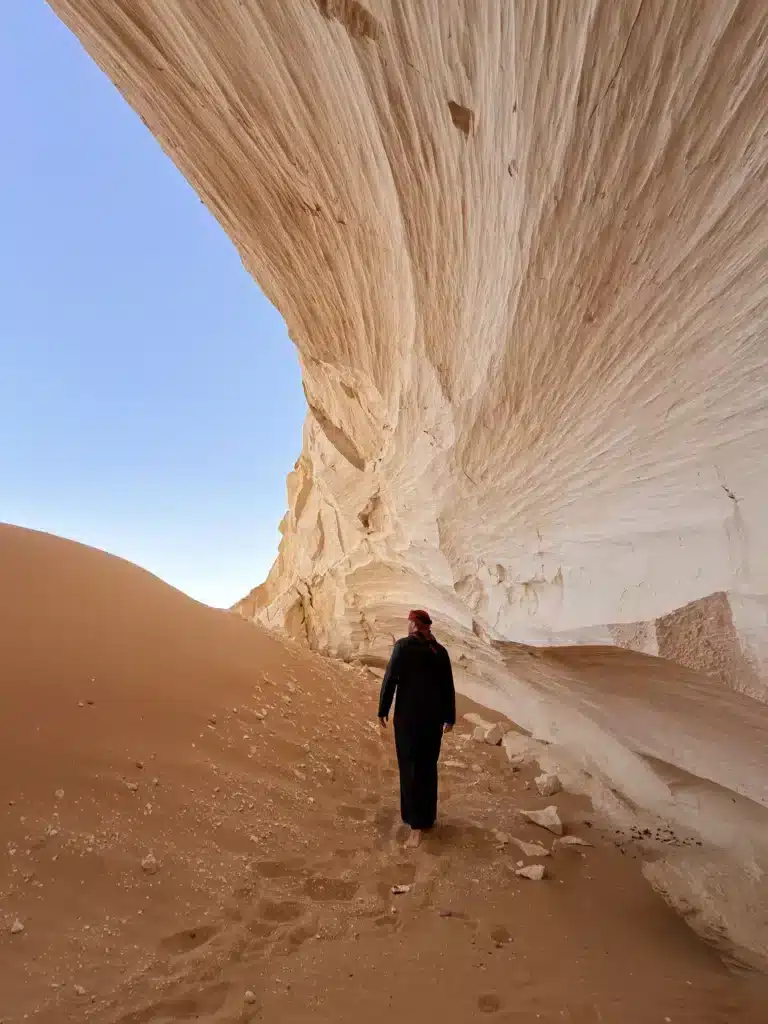
About 4 km between white cliffs and golden dunes, with a few soft sand climbs. One of the most beautiful walks in Egypt. Read more in our Crystal Mountain and Agabat guide.
3. The Old White Desert
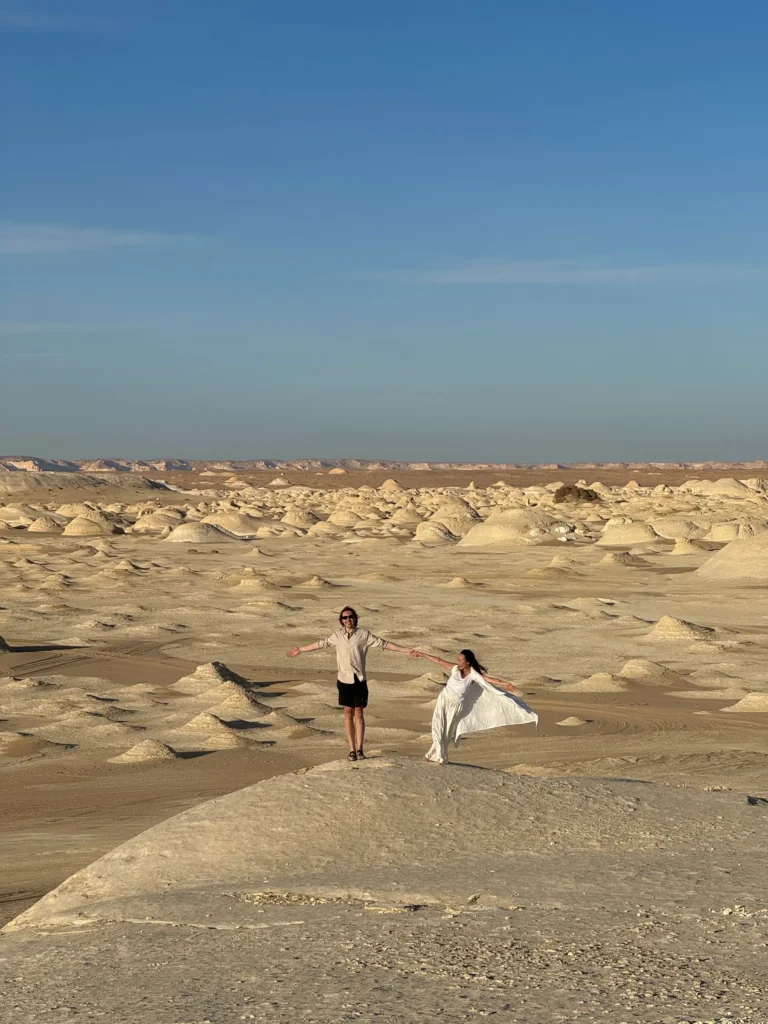
Hard chalk ground, arches and tall plateaus. Easy walking with big views from the edge of the plateau.
4. The New White Desert
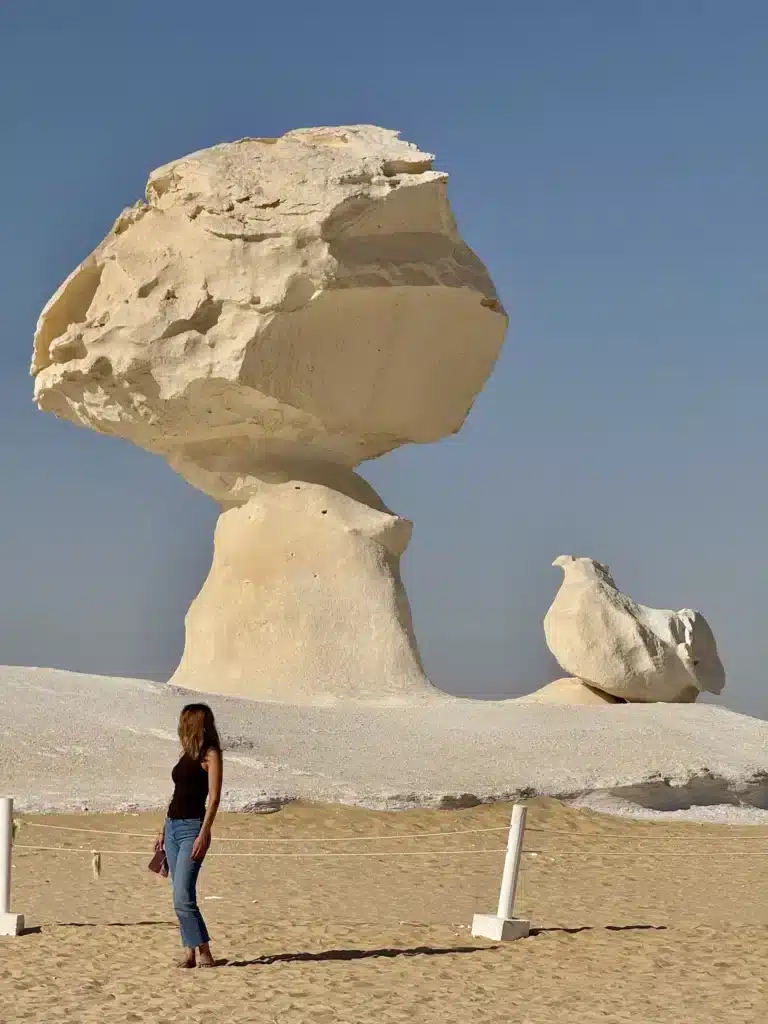
The famous field of mushroom and pillar formations. A sunrise walk to Mushroom Rock and Chicken Rock is the perfect ending to a trek.
How a supported desert trek works
Hiking in the desert alone is not a good idea. Tracks are not marked, water is heavy and the formations look alike. That is why we run supported treks:
- A local guide from Bahariya walks with you and chooses the route.
- A 4×4 carries water, lunch and your bags, and meets you at set points.
- You carry only a small day pack.
- Camp is set up for you each evening, with dinner on the fire.
On our 3-day White Desert hiking tour you walk 8 to 14 km a day, and the guide shortens or extends each stage for the group.
How hard is it?
We rate it moderate. The ground is mostly flat, firm sand and hard chalk, with a few short climbs and some soft sand. The real challenges are the sun and the dry air, not the terrain.
- Fitness: able to walk 3 to 4 hours a day with breaks.
- Children: active kids from about 10 years old usually enjoy it.
- Seniors: welcome, with shorter stages and more time in the car.
Best time to walk in the desert
October, November, February, March and April are ideal: warm days, cool nights and long golden light. December and January are also good, with fresh mornings and nights close to 0°C. From May to September we only hike very early and late in the day, and we usually recommend a shorter trip.
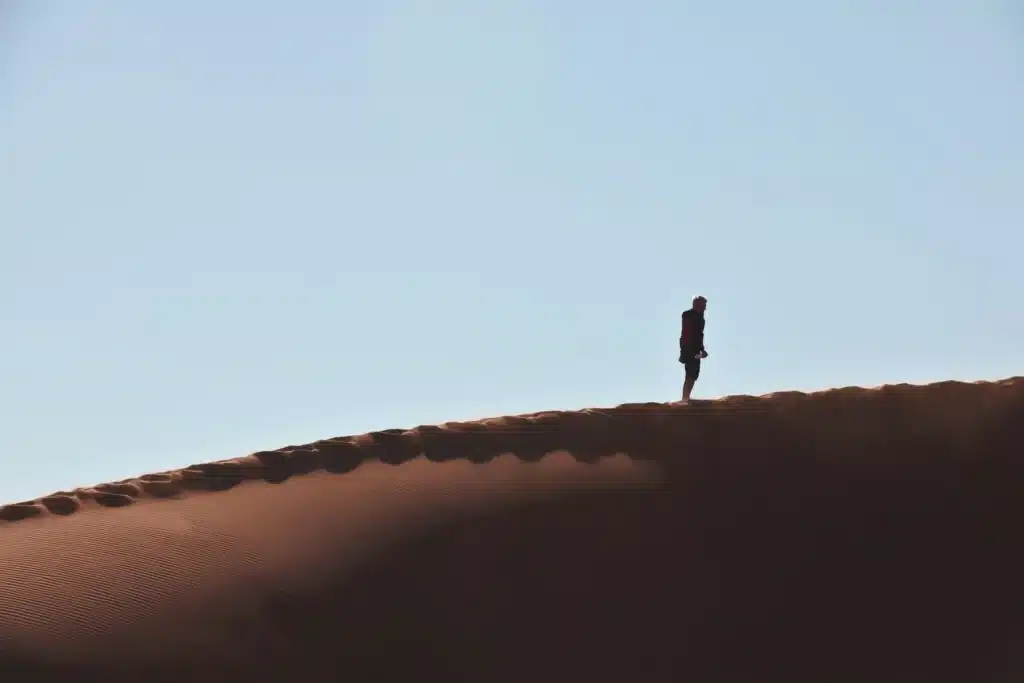
A day on a supported trek
- 6:30 AM sunrise over the chalk rocks, tea and breakfast.
- 8:00 AM start walking in the cool morning air.
- 11:30 AM meet the 4×4 for lunch and a long rest in the shade.
- 3:30 PM walk again in the golden afternoon light.
- 5:30 PM reach camp for sunset, dinner on the fire and the stars.
The rhythm is easy and natural. You walk when the light is best and rest when the sun is high.
Wildlife and fossils along the way
The White Desert looks empty, but it is alive. Early in the morning you will see the small tracks of the fennec fox, desert birds and beetles in the sand. At night, foxes sometimes visit the edge of camp. In the chalk you can find fossil shells and sea urchins, reminders that this was the bottom of a sea millions of years ago. Look, photograph and leave them for the next hikers.
What to wear and pack
- Light hiking shoes or trail runners with good grip. Gaiters keep sand out.
- A wide hat, sunglasses, sunscreen and a long sleeved shirt.
- A 1.5 liter bottle or hydration bag for your day pack.
- A warm fleece or jacket for the evening.
- Walking poles if you like them on soft sand.
- Blister plasters and lip balm.
Safety and leave no trace
We carry plenty of water, a first aid kit and phones, and our team knows every track. Please follow your guide, never walk off alone and tell us about any health conditions before the trip.
The White Desert is a national park. Do not climb on fragile formations, do not take fossils or stones, and carry out all your rubbish. We always camp away from the most delicate rocks so the next travelers find the desert as beautiful as you did.
White Desert hiking: the short version
- White Desert hiking is moderate, non technical walking on firm ground.
- The best routes link the Black Desert, Agabat Valley and the chalk formations.
- Walk 8 to 14 km a day with a 4×4 carrying water and bags.
- Go from October to April and walk in the morning and late afternoon.
- Always hike with a local guide and leave no trace.
White Desert hiking FAQ
Is hiking in the White Desert difficult?
It is moderate. The ground is mostly flat and firm, with short climbs. The sun and dry air are the main challenges.
How far do you hike each day?
Usually 8 to 14 km a day, adapted to the group.
Can I hike in the White Desert without a guide?
It is not recommended. Tracks are unmarked and the formations look alike. A local guide and support car keep you safe.
What is the best month for hiking in the White Desert?
October to April. Avoid midday walking from May to September.
Do I carry my own luggage?
No. On our supported trek the 4×4 carries luggage, water and lunch.
Where do hikers sleep?
At desert camps with mattresses, sleeping bags and blankets.

Eyad was born in Bahariya Oasis and works as a licensed tour guide. With the Egypt Desert Trips team of local guides and drivers, he hosts travelers in Cairo, the Western Desert, the Nile Valley and Sinai. Meet the team.
Keep planning
Planning your own Egypt journey?
Tell us your dates, interests and travel style. Eyad and the Egypt Desert Trips team will help shape a private journey around the Egypt you want to experience.
10 Things to Do in Fayoum, Egypt: Dunes, Waterfalls and Whales
A local guide to the best things to do in Fayoum, from the waterfalls of Wadi El Rayan and the…
Read Guide
12 Things to Do in the White Desert, Egypt (A Local’s List)
Our local list of the best things to do in the White Desert of Egypt, from sunset at Mushroom Rock…
Read Guide
Sandboarding in Egypt: Best Dunes, Fayoum Buggy Rides and Tips
Where to go sandboarding in Egypt, how a first session works, how to combine it with a dune buggy ride…
Read Guide