

White Desert Rock Formations: How They Formed and Where to Find Each One (2026)
 Local insight by Eyad Elzaghandi
13 min read
The White Desert rock formations are made of chalk, a soft white limestone built from the shells of microscopic sea algae that settled on the floor of an ancient sea roughly 100 to 66 million years ago. When the land rose and the sea dried up, wind loaded with sand started cutting the soft rock and left harder caps on top. The result is a field of mushrooms, cones, pillars and animal shapes inside White Desert National Park, a protected area of about 300 km² north of Farafra, about 5 to 6 hours from Cairo.
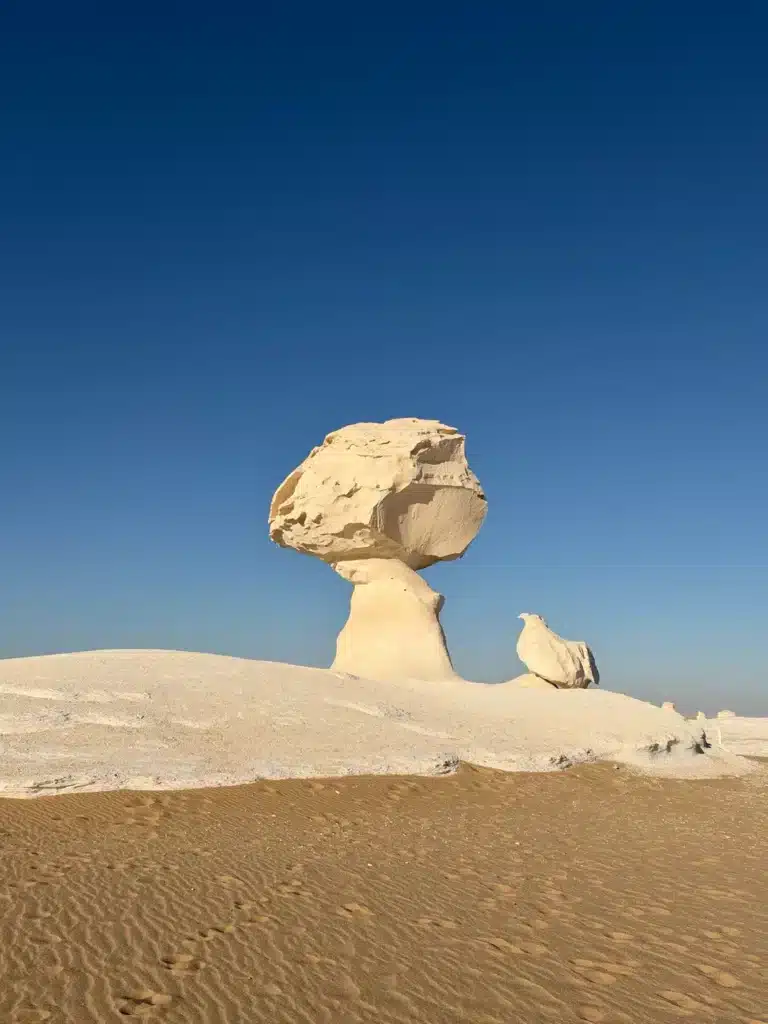
- RockChalk and limestone
- AgeAbout 100 to 66 million years
- Shaped byWind and sand
- Protected since2002
In this guide
- What the formations are made of
- The ancient sea story
- How the wind carved the shapes
- Types of formations you will see
- The New White Desert
- The Old White Desert
- The famous named formations
- Agabat, the gateway valley
- Fossils and what you may find
- Why the rocks change colour
- Photography guide
- Why the formations are fragile
- The national park in numbers
- Where the formations sit on the route
- How much time you need
- Best season to see them
- Common myths
- With children
- Inselbergs explained
- The role of ancient rain
- Camping between the formations
- Walking among the formations
- Animal tracks around the rocks
- White, Black and Crystal compared
- Read the rocks with a local
- White Desert rock formations in one minute
- White Desert rock formations FAQ
What the formations are made of
Pick up a loose piece of white rock in the park and rub it between your fingers. It leaves a fine white powder, the same feeling as school chalk. That is because it is chalk, a soft and porous kind of limestone. Under a microscope it is a mass of tiny plates from coccolithophores, single celled algae that floated in warm seawater. When they died, their shells rained down to the seabed and built layer after layer of white mud that hardened into rock.
| Material | Where you see it | How it feels |
|---|---|---|
| Chalk | The white towers and mushrooms | Soft, powdery, light |
| Harder limestone | The darker caps on top of the mushrooms | Rough, heavier |
| Flint and chert | Dark nodules inside the chalk | Glassy, very hard |
| Iron pyrite and marcasite | Small black balls on the ground | Heavy, metallic |
| Quartz | Crystal Mountain on the way | Clear, sharp crystals |
The ancient sea story
During the late Cretaceous period most of North Africa lay under the Tethys Sea, the ocean that came before the modern Mediterranean. Dinosaurs walked the coasts while sea creatures filled the water above what is now the Farafra Depression. Over millions of years tectonic movement lifted the seabed above sea level. The water drained away and the climate slowly became the hyper arid desert you see today. Every white rock in the park is a piece of that old seabed.
| Time | What happened |
|---|---|
| About 100 to 66 million years ago | Chalk builds up on the seabed of the Tethys Sea |
| After the sea retreats | The land rises and dries |
| Wetter periods | Rain dissolves and rounds the chalk |
| Recent thousands of years | Wind and sand carve the shapes we see |
| Today | Protected as White Desert National Park |
Dates are rounded and come from published geology summaries.
How the wind carved the shapes
The main sculptor is the north wind. It blows steadily across the Western Desert and carries grains of sand close to the ground. Those grains act like sandpaper. They cut fastest about one metre above the surface, where the sand is densest, and much slower higher up. Soft chalk at the base wears away while the top survives. Where a harder layer of limestone sits on top, it works like an umbrella, and over time a stem forms under a cap. That is how a mushroom is born.

Types of formations you will see
Geologists use a few words for these shapes. Knowing them makes the landscape easier to read.
| Type | What it looks like | Where to see it |
|---|---|---|
| Mushroom or pedestal rock | A cap on a thin stem | New White Desert |
| Inselberg | An isolated hill rising from flat ground | Old White Desert |
| Yardang | A long ridge shaped like an upturned boat | Open plains north of the park |
| Pinnacle or cone | A sharp white tower | Across the park |
| Arch | A rock with a hole worn through | Agabat area and canyons |
| Chalk cliff | A white escarpment wall | Old White Desert and Agabat |
The New White Desert
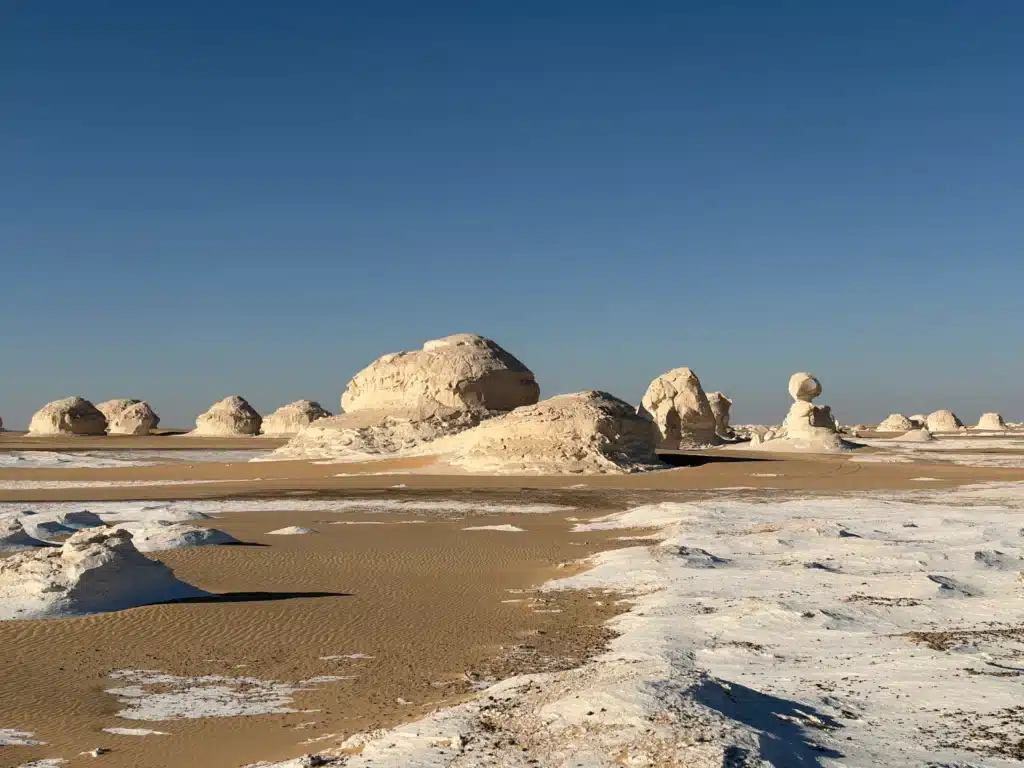
Most travelers spend their afternoon and night in the area guides call the New White Desert. It is a wide plain scattered with thousands of small and medium chalk shapes, close to the main road between Bahariya and Farafra. This is where the famous Mushroom and Chicken stand, and where most camps are set up because the ground is flat and the views are open in every direction.
The Old White Desert
Further south and deeper off road is the Old White Desert. Here the formations are larger, older and more eroded, with tall inselbergs and white cliffs rising like icebergs from the sand. It feels emptier and wilder. A visit needs more driving time on sand tracks, so it is usually included on two night trips or photography tours.
| Area | Formations | Best for |
|---|---|---|
| New White Desert | Many small and medium shapes, the icons | First visits, camping, sunset |
| Old White Desert | Giant inselbergs and cliffs | Photography, silence, longer trips |
| Agabat | Canyons and towers above the dunes | Views and walks |
The famous named formations
Guides and travelers have given names to the shapes that look most like something familiar. Names change a little from guide to guide, but these are the ones you will hear most.
| Name | What to look for | Notes |
|---|---|---|
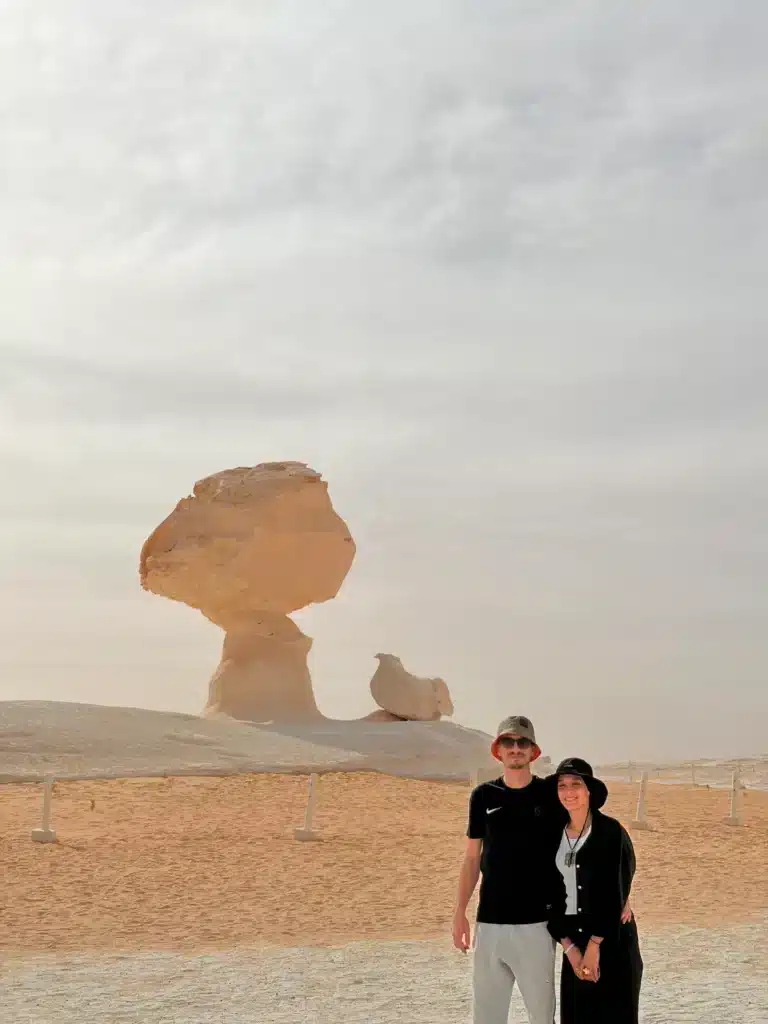
| The Mushroom | A huge cap on a narrow stem | The most photographed rock in Egypt’s desert |
| The Chicken | A shape like a hen sitting beside the Mushroom | Forms the classic pair with the Mushroom |
| The Rabbit | Long ears on a rounded body | Ask your guide, it changes with the angle |
| The Camel | A humped rock | Easy to spot at sunset |
| The Sphinx | A crouching animal with a head | One of several sphinx shapes |
| The Monolith | A tall isolated tower | Great for silhouettes |
| Tent rocks | Rows of white cones | Often near camp sites |
Names are informal and used by local guides, not official park names.
Agabat, the gateway valley
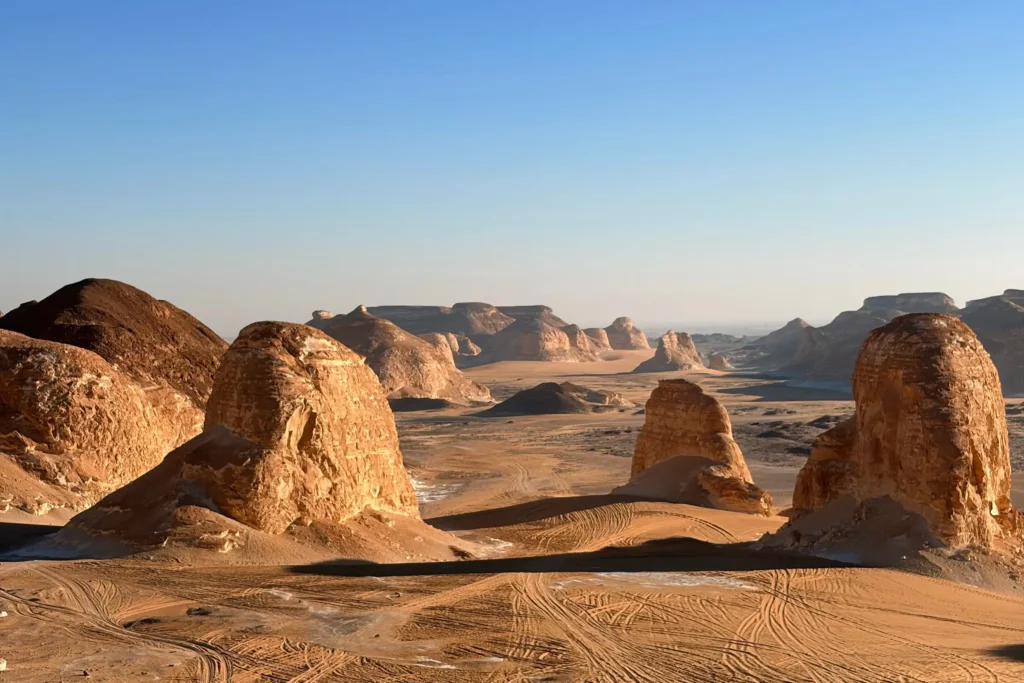
Before you reach the white plain from the north, the road passes the Agabat area, which means difficult passes in Arabic. Here golden dunes pour between tall white and yellow towers and cliffs. It is one of the most dramatic views in the Western Desert and a favourite stop for photos and sandboarding. Read more in our guide to things to do in the White Desert.
Fossils and what you may find
Because the chalk was once seabed, it still holds traces of sea life. Guides regularly point out small shells and the shapes of ancient sea creatures in the rock. You may also see dark balls of iron minerals on the ground and fragments of flint that early humans used for tools.
| Find | What it is | Rule |
|---|---|---|
| Small shells | Fossil bivalves and snails | Look, photograph, leave |
| Sea urchin shapes | Fossil echinoids | Leave in place |
| Black metallic balls | Iron pyrite or marcasite | Do not collect |
| Worked flint | Stone tools of early desert people | Report to your guide, never take |
Taking rocks, fossils or artefacts out of a protected area is not allowed. Every piece left in place keeps the park special for the next traveler.
Why the rocks change colour
Chalk reflects almost all the light that hits it, so it takes on the colour of the sky. At midday it is bright white and hard on the eyes. In the last hour before sunset it turns cream, then gold, then pink and orange. Under a full moon it glows silver blue, which is why many travelers say the White Desert looks like snow or the surface of the moon.
| Time | Colour | Photo advice |
|---|---|---|
| Sunrise | Soft pink and blue | Shoot towards the sun for silhouettes |
| Midday | Bright white | Use sunglasses, avoid harsh shadows |
| Golden hour | Gold and orange | The best light for the Mushroom |
| Blue hour | Cool blue | Long exposures |
| Full moon night | Silver | Bring a tripod |
| Moonless night | Dark, starry | Milky Way over the formations |
Photography guide
The formations are a dream for photographers, but the light is strong and the white surface tricks your camera. Our White Desert photography tour is built around the best light and the quietest corners.
- Underexpose by one stop at midday so the white does not burn out.
- Put a person next to the Mushroom to show its size.
- Use a wide lens for fields of shapes and a longer lens to compress rows of cones.
- Shoot the Milky Way in moonless months, with a formation in the foreground.
- Protect your camera from fine chalk dust with a bag and a blower.
- Never climb fragile formations for a shot.
Why the formations are fragile
Chalk is soft. A footstep on a thin stem or a car driven too close can break a shape that took thousands of years to form. Some well known rocks have already lost parts in recent years. Good operators keep vehicles on existing tracks, camp away from fragile shapes and never let guests climb on them.
- Do not climb on mushrooms or thin pillars.
- Do not carve names or draw on the chalk.
- Stay on existing tracks with vehicles.
- Take all rubbish back to Bahariya.
- Use a fire pan or the existing fire spot at camp.
The national park in numbers
White Desert National Park was declared a protected area in 2002. It covers about 300 km² in the Farafra Depression in New Valley Governorate, about 45 km north of Farafra town. The highest point inside it rises to about 353 m. It protects not only rocks but also wildlife such as the fennec fox, Rüppell’s fox, dorcas gazelle and the rare rhim gazelle.
| Fact | Detail |
|---|---|
| Declared | 2002 |
| Area | About 300 km² |
| Governorate | New Valley |
| Nearest town | Farafra, about 45 km south |
| From Bahariya | About 1.5 to 2 hours by car |
| From Cairo | About 5 to 6 hours |
| Wildlife | Fennec fox, Rüppell’s fox, gazelles, sand cat |
Where the formations sit on the route
Most trips drive from Cairo to Bahariya, then south through the Black Desert, past Crystal Mountain and Agabat, into the White Desert. Each stop shows a different geology.
| Stop | Geology | Read more |
|---|---|---|
| Black Desert | Volcanic and iron rich black stones on golden hills | Black Desert guide |
| Crystal Mountain | A ridge of quartz crystals | Crystal Mountain guide |
| Agabat | White and yellow towers with dunes | Things to do |
| New White Desert | Mushrooms and the Chicken | White Desert guide |
| Old White Desert | Giant inselbergs | Ask for a 2 night trip |
How much time you need
A day trip from Bahariya shows the highlights of the New White Desert in a few hours. To see the formations at sunset, under the stars and at sunrise, stay one night. To add the Old White Desert, plan two nights. Our guide to day trip vs overnight compares the options.
Best season to see them
October to April gives warm days and comfortable walks between the formations, with cold nights in December and January. Summer is very hot at midday, so visits focus on late afternoon and early morning. Read our full best time to visit the White Desert guide.
Common myths
A few ideas about the White Desert are repeated online but are not quite right.
| Myth | Reality |
|---|---|
| It is white sand | It is white chalk rock, the sand is mostly golden |
| The shapes were carved by people | They are natural wind erosion |
| It snowed there | The white is chalk, though winter nights can be near freezing |
| The formations last forever | Soft chalk breaks easily and needs protection |
| You need weeks to see it | One night shows the highlights |
With children
Children love hunting for animal shapes, finding fossil shells and running between the mushrooms. Turn it into a game: who can find the rabbit first. Keep them off fragile stems and bring warm clothes for the evening.
Inselbergs explained
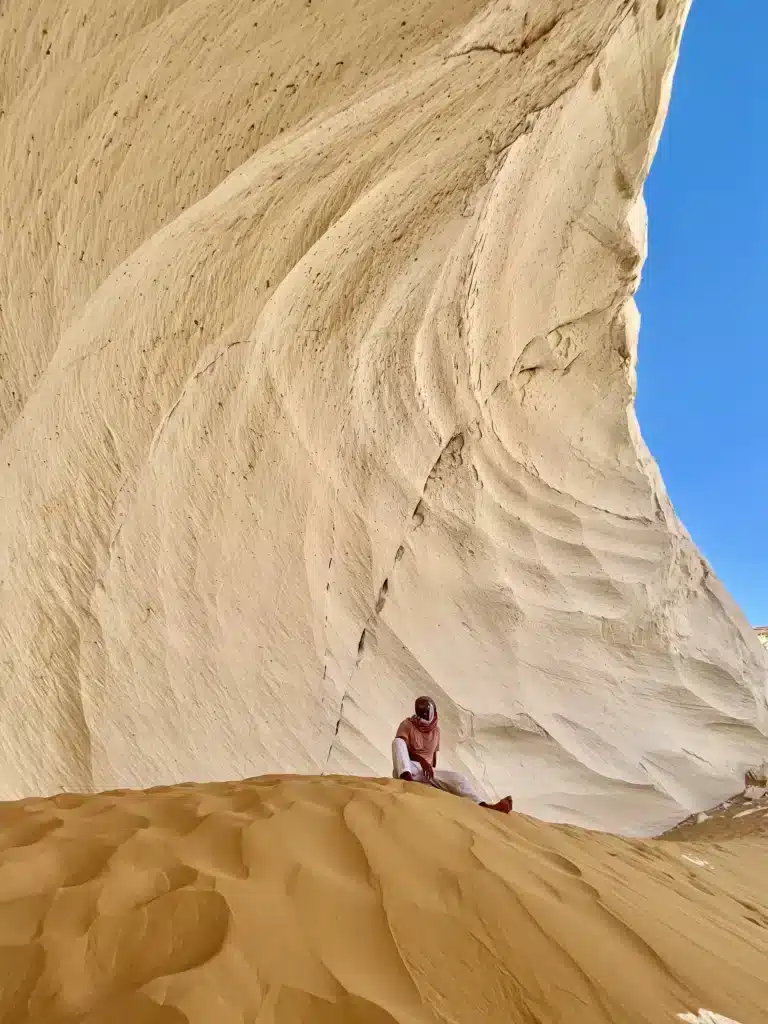
Inselberg is a German word meaning island mountain. In the Old White Desert these isolated white hills rise steeply from a flat floor, some many metres high. They are what is left of a thicker layer of chalk that once covered the whole area. The ground around them was worn down by wind and ancient water, while the inselbergs survived. Standing at their foot at sunset is one of the most humbling experiences in the desert.
The role of ancient rain
Wind is not the only sculptor. During wetter periods of the past, rain fell on the Western Desert. Rainwater is slightly acidic, and it dissolves chalk along cracks and joints. That is why many formations have smooth, rounded edges and why some cracks look like they were opened with a knife. When water evaporated it left thin crusts of minerals on the surface, which you can still see as shiny patches on some rocks.
Camping between the formations
Spending a night here lets you see the formations change from gold to silver. Camps are simple, with a windbreak, mattresses, blankets and a fire. Read White Desert camping for what to expect and our packing list for the cold nights.
Walking among the formations
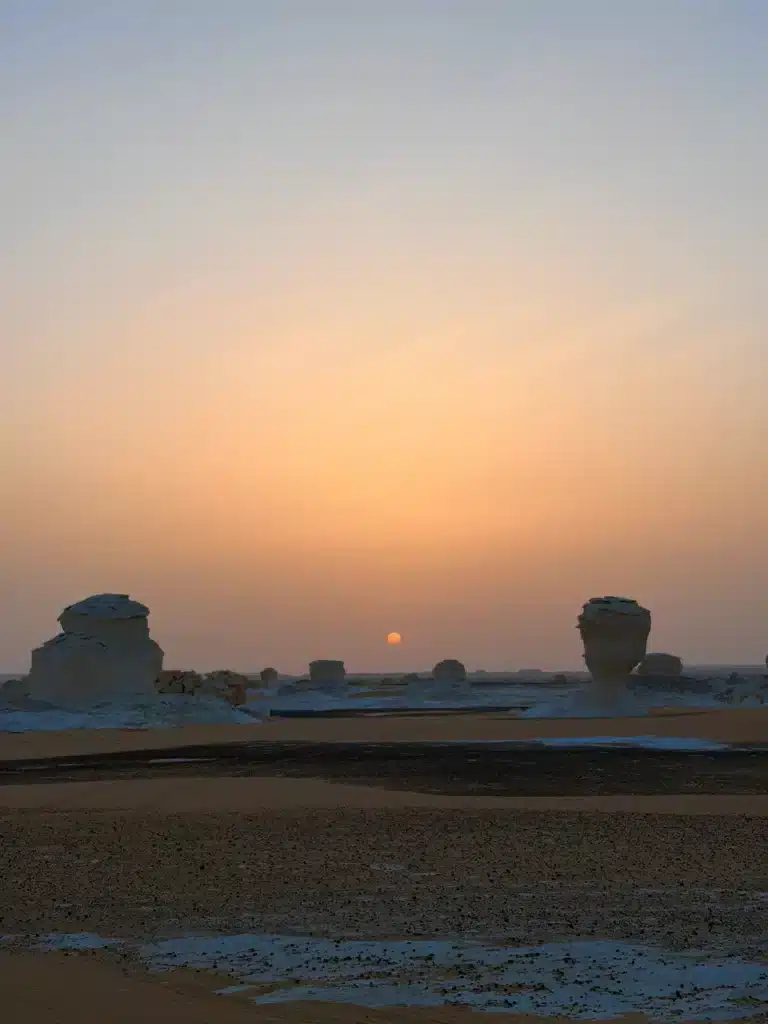
The best way to understand the shapes is on foot. Short walks from camp at sunrise reveal fossils, animal tracks and hidden arches. Longer guided hikes cross the Old White Desert and the Agabat cliffs. See our White Desert hiking guide and the hiking tour.
Animal tracks around the rocks
At dawn the sand between the formations is covered in tiny footprints. Most belong to the fennec fox, a small desert fox with huge ears that comes close to camps at night. You may also see tracks of beetles, lizards and desert birds. Keep food packed away and never feed the foxes.
White, Black and Crystal compared
Three very different landscapes sit within two hours of each other.
| Place | Colour | Made of | Best time |
|---|---|---|---|
| White Desert | White | Chalk | Sunset, night, sunrise |
| Black Desert | Black on gold | Volcanic and iron rich rock over sand | Afternoon |
| Crystal Mountain | Clear and white | Quartz | Midday sun on the crystals |
| Agabat | Gold and white | Limestone towers and dunes | Late afternoon |
Read the rocks with a local
Our team grew up in Bahariya and has guided in the White Desert for years. We know which formations glow best at sunset, where the quiet camp spots are and how to keep the rocks safe for the next visitors.
White Desert rock formations in one minute
- The formations are chalk from an ancient sea, about 100 to 66 million years old.
- Sand carried by the north wind carved them into mushrooms, cones and pillars.
- The Mushroom and the Chicken stand in the New White Desert.
- The Old White Desert has giant inselbergs and needs more time.
- The rocks are fragile, so look and photograph but never climb or collect.
White Desert rock formations FAQ
What are the White Desert rock formations made of
Chalk, a soft white limestone made from the shells of microscopic sea algae.
How old are the White Desert formations
The chalk formed roughly 100 to 66 million years ago, while the shapes were carved much more recently by wind.
How were the mushroom rocks formed
Sand blown by the wind wore away the soft base faster than the harder cap, leaving a stem under a cap.
Where are the Mushroom and Chicken
In the New White Desert, inside White Desert National Park north of Farafra.
What is the difference between the New and Old White Desert
The New area has many smaller icons close to the road, the Old area has giant inselbergs deeper off road.
Can I find fossils in the White Desert
Yes, small fossil shells are common, but collecting is not allowed in the protected area.
Can I climb the formations
No, the chalk is fragile and climbing damages the shapes.
When is the best light for photos
The hour before sunset and the hour after sunrise.
Official sources and further reading
- Britannica: Western Desert of Egypt
- Britannica: Bahariya Oasis
- Experience Egypt: official Egypt tourism site
- Ministry of Tourism and Antiquities: Egypt monuments
- GOV.UK: Egypt travel advice
- Lonely Planet: Egypt travel guide
- Eyad Elzaghandi, author of this guide, founder of Egypt Desert Trips and licensed local guide: 5.0 on Tripadvisor from 43 traveler reviews

Eyad Elzaghandi wrote this guide. He is the founder of Egypt Desert Trips, a licensed tour guide born in Bahariya Oasis and the organiser of every trip on this site. With a team of local guides and drivers he hosts travelers across the Western Desert, Cairo, the Nile Valley and Sinai. Travelers rate his tours 5.0 on Tripadvisor from 43 reviews, listed as Elzaghandi Travel. Meet the team.
Keep planning
Planning your own Egypt journey?
Tell us your dates, interests and travel style. Eyad and the Egypt Desert Trips team will help shape a private journey around the Egypt you want to experience.
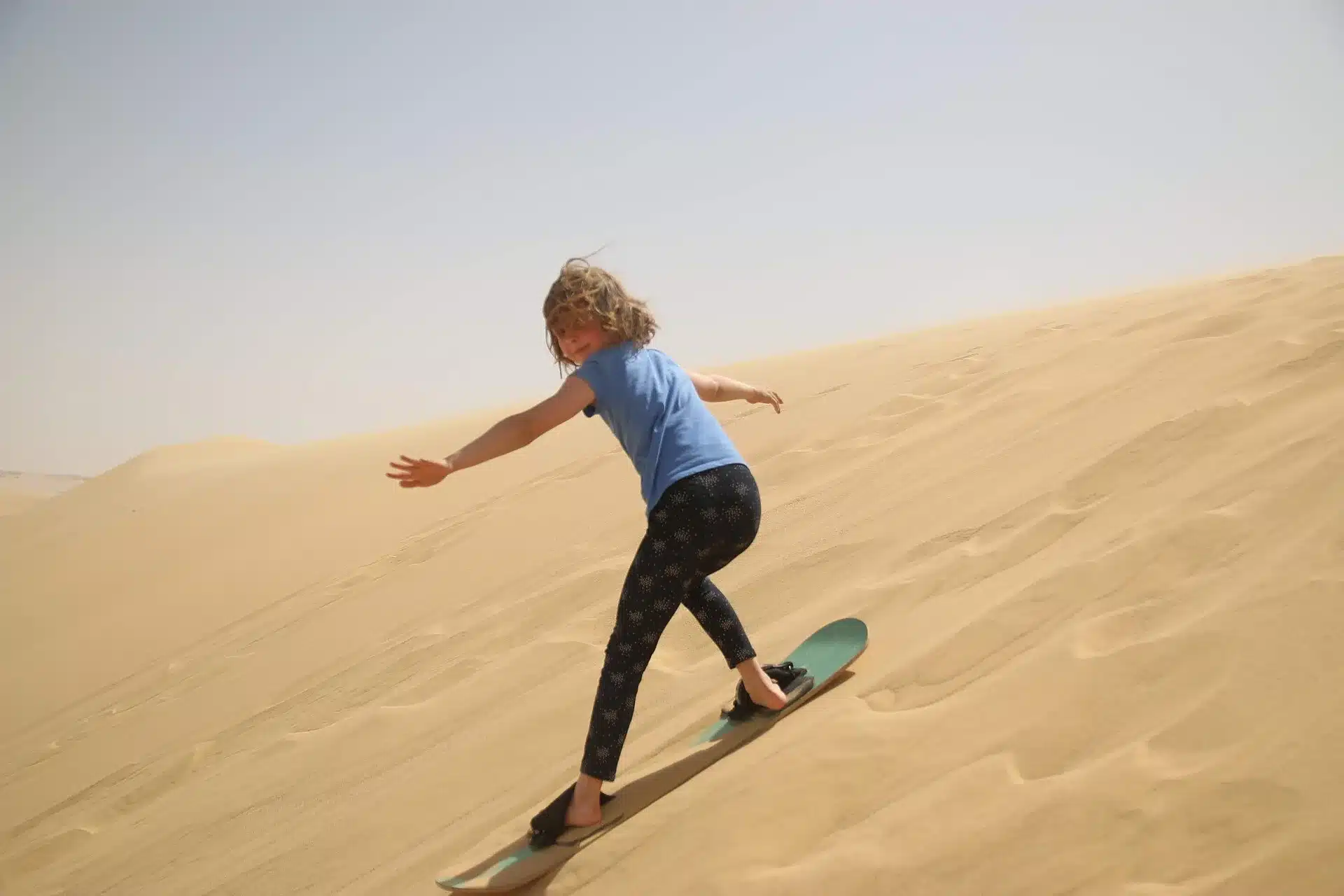
Sandboarding in Fayoum 2026: Best Dunes, Prices and Beginner Guide
Everything you need for sandboarding in Fayoum: the best dunes around Magic Lake and Wadi El Rayan, how a day…
Read Guide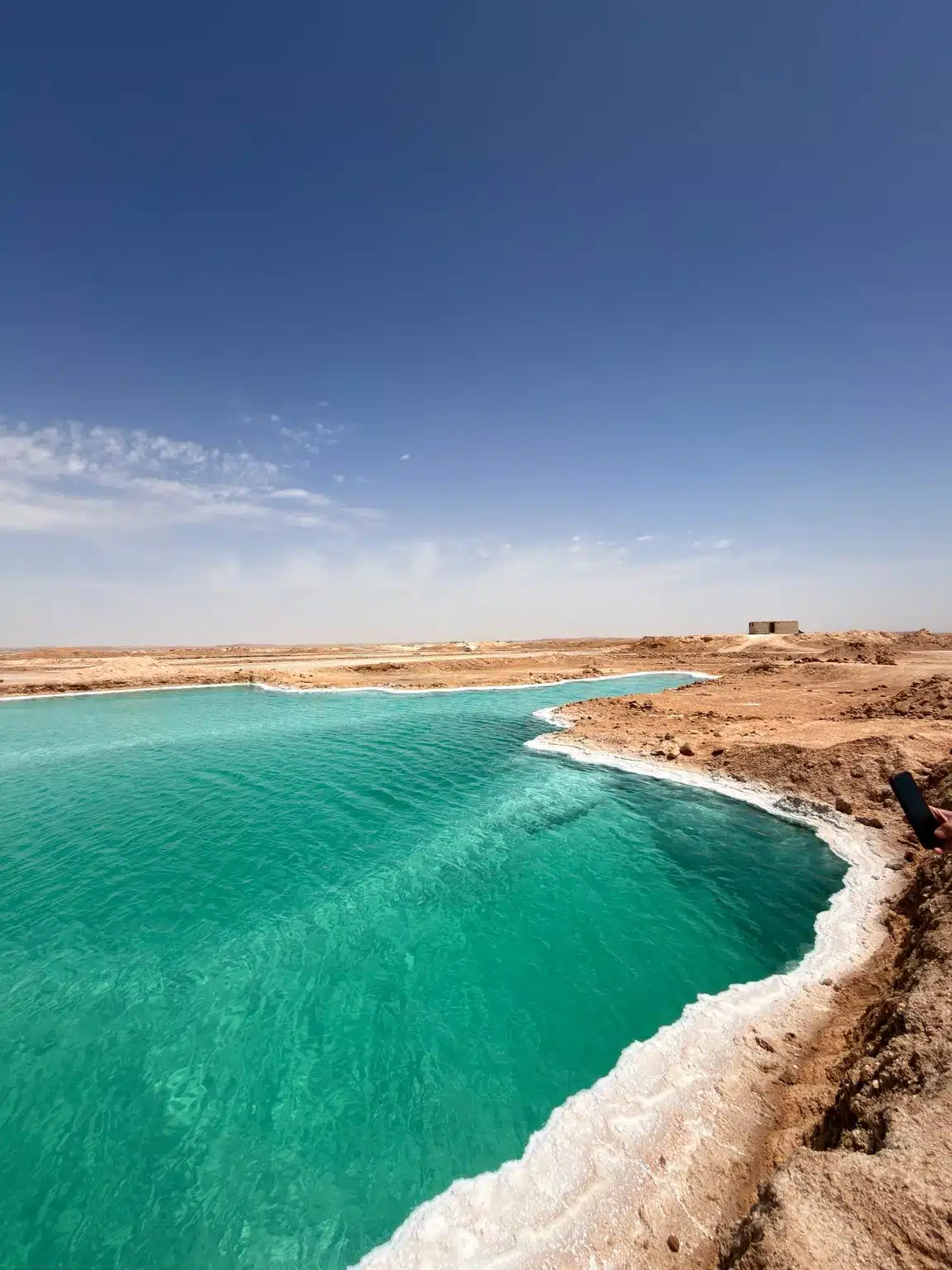
Siwa Oasis Tour Cost from Cairo: Real 2026 Prices by Group Size
Real Siwa Oasis tour prices from Cairo for 2026: 3, 4 and 5 day private tours by group size, what…
Read Guide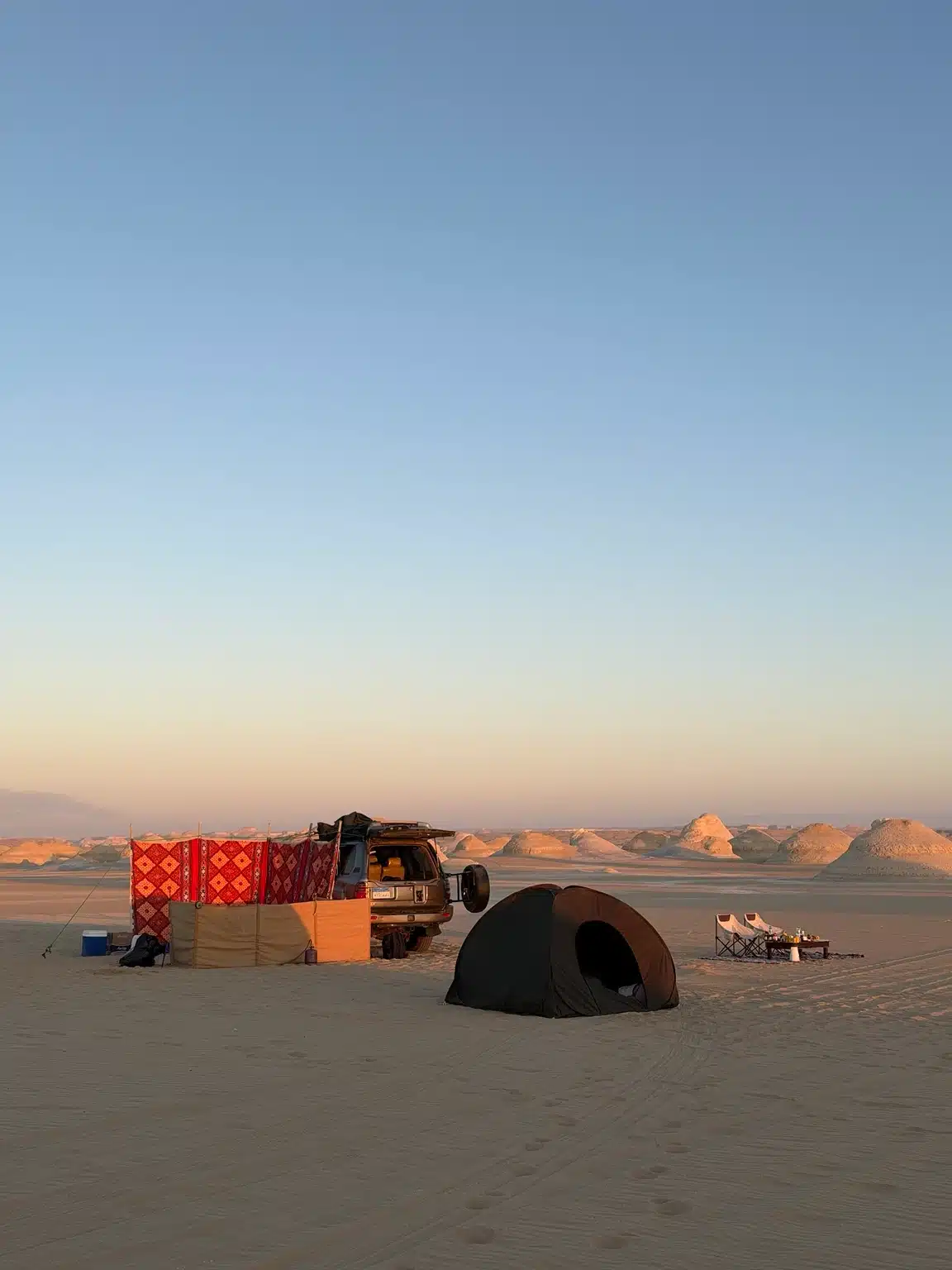
White Desert Tour from Hurghada or Luxor: Routes, Times and Best Options (2026)
How to visit the White Desert from Hurghada, Luxor, Sharm or Alexandria: driving times, flights via Cairo, private pickup from…
Read Guide